
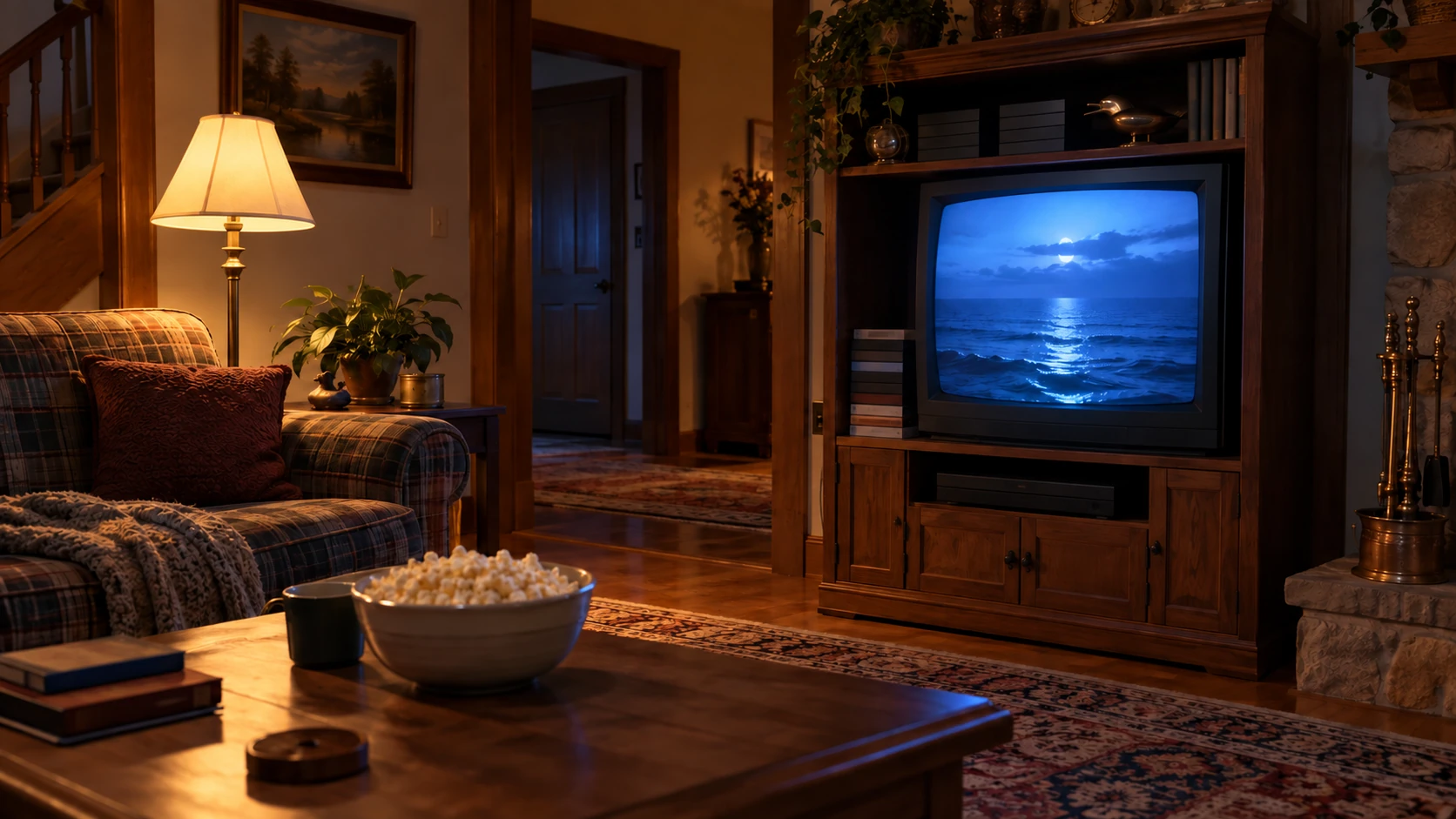
The cable guide had the visual confidence of a spreadsheet and somehow made an evening feel full of possibility. Missing it does not mean you miss service appointments, equipment rentals or a package full of channels nobody in the house could identify. Nostalgia is more useful when you take it apart: what, exactly, do you want back?
01 / 07The remote that just changed the channel
Grazers brings channel up/down and next-video controls into a single viewing surface. Public stations are free, and 90s mode supplies a familiar screen treatment. You get a modern selection of creator videos through an old, pleasantly direct gesture: press a button and see what is on.
Try the remote before opening a search box.
02 / 07An evening with a schedule
A local PBS livestream can give you an actual broadcast timetable. Find a program you want and make a small appointment with it. You can still use on-demand viewing when life gets in the way; the schedule is a tool for anticipation, not an obligation.
Choose one weekly program to watch at its scheduled time.
03 / 07The accidental discovery
Leave one slot in your evening for something you would not normally search for. A live streaming guide can supply that accident. So can letting a friend choose. The trick is to allow surprise while keeping the right to change your mind.
Sample a genre you usually walk past.
04 / 07The shared reference point
Invite someone to watch the same film or episode and talk afterward. Send an exact title and where it is available. If you share a Grazers station, remember it opens the same topic rather than guaranteeing the same video at the same moment. Shared context needs a little coordination.
Send one concrete invitation rather than a giant list of recommendations.
05 / 07Saturday-morning energy
Build a small weekend ritual around something comforting: breakfast and a familiar show, a craft video before making something, or a film from the library. You are recreating a rhythm, not proving that everything was better before broadband. Keep it simple enough that it survives the second weekend.
Pair one viewing choice with an ordinary offline ritual.
06 / 07Fewer decisions
Pick the category in advance and limit the shortlist. An enormous catalog is a feature until choosing becomes the entire evening. Try one familiar option and one wildcard. If neither appeals, doing something else is a valid result; the television does not need to win every night.
Make a two-choice shortlist before sitting down.
07 / 07A reason to stop
Recreate the pleasant boundary of a program ending without recreating the entire endless lineup. Finish an episode, turn off the screen and do the next thing. On YouTube itself, disabling Autoplay can help make that boundary explicit. On a continuously playing station, use your own reminder.
Decide what comes after watching before you start.
An example of three deliberate evenings
| Comparison | minutes / session |
|---|---|
| Weeknight discovery | 30 |
| One episode slot | 45 |
| Weekend movie slot | 100 |
Give the evening a shape
Set a total session and a browsing allowance. This is a planning aid, not a timer; set a separate reminder if you want one.
40 minutes left to watch
Total time minus browsing time. Decide what you will do afterward. Entries are not saved, and this tool does not stop video playback.
Try one change tonight
You can miss cable and be glad you left. Bring back the remote, the ritual and the surprise. The bill does not need an invitation.
Sources & useful links
Provider pages explain their own services. Research findings are identified by study; our planning examples and recommendations are editorial suggestions. Availability and service terms can change.